

How does a diode laser machine compare with CO2 laser machines in medical applications?
Leave a message

In the realm of medical applications, laser technology has emerged as a revolutionary force, offering precise and effective solutions for a wide range of conditions. Among the various types of lasers used in medicine, diode lasers and CO2 lasers stand out as two of the most popular choices. As a supplier of diode laser machines, I am often asked about the differences between these two technologies and which one is better suited for specific applications. In this blog post, I will provide a detailed comparison of diode laser machines and CO2 laser machines in medical applications, highlighting their respective advantages and limitations.
Understanding Diode Lasers and CO2 Lasers
Before delving into the comparison, it is important to understand the basic principles behind diode lasers and CO2 lasers. Diode lasers are semiconductor devices that emit light through the process of stimulated emission. They are compact, energy-efficient, and can be tuned to emit light at specific wavelengths, making them ideal for a variety of medical applications. On the other hand, CO2 lasers are gas lasers that use a mixture of carbon dioxide, nitrogen, and helium as the active medium. They emit light at a wavelength of 10,600 nanometers, which is absorbed by water in the tissues, making them particularly effective for cutting, ablating, and coagulating tissue.
Comparison of Diode Laser Machines and CO2 Laser Machines in Medical Applications
1. Wavelength and Tissue Interaction
One of the key differences between diode lasers and CO2 lasers is their wavelength and how they interact with the tissues. Diode lasers can be tuned to emit light at a wide range of wavelengths, typically between 630 and 1,064 nanometers. This allows them to target specific chromophores in the tissues, such as melanin, hemoglobin, and water, depending on the application. For example, a Triple Wavelength Diode Laser Machine can emit light at three different wavelengths, allowing it to treat a variety of skin conditions, including hair removal, pigmented lesions, and vascular lesions.
In contrast, CO2 lasers emit light at a fixed wavelength of 10,600 nanometers, which is strongly absorbed by water in the tissues. This makes them particularly effective for cutting and ablating tissue, as the energy from the laser is rapidly absorbed by the water molecules, causing them to vaporize and remove the tissue. However, the high absorption of CO2 lasers also means that they have a relatively shallow penetration depth, typically less than 1 millimeter, which limits their use in deeper tissues.
2. Precision and Control
Another important factor to consider when comparing diode laser machines and CO2 laser machines is their precision and control. Diode lasers are known for their high precision and control, as they can be focused to a very small spot size, typically less than 1 millimeter. This allows them to target specific areas of the tissues with minimal damage to the surrounding tissue. For example, a 980nm Diode Laser Spider Vein Removal Machine can be used to target and destroy spider veins without affecting the surrounding skin.
CO2 lasers, on the other hand, are less precise and more difficult to control, as they have a relatively large spot size and a broader beam profile. This can make it more challenging to target specific areas of the tissues, especially in delicate areas such as the face. However, CO2 lasers can be used with a variety of delivery systems, such as scanners and handpieces, to improve their precision and control.
3. Treatment Depth and Penetration
The treatment depth and penetration of a laser are important considerations when choosing a laser for a specific medical application. Diode lasers can be tuned to emit light at different wavelengths, which allows them to penetrate the tissues to different depths. For example, a Portable 808 Diode Laser Hair Removal Machine emits light at a wavelength of 808 nanometers, which can penetrate the skin to a depth of up to 5 millimeters, allowing it to target the hair follicles and destroy them.
CO2 lasers, on the other hand, have a relatively shallow penetration depth, typically less than 1 millimeter, which limits their use in deeper tissues. However, CO2 lasers can be used to treat a variety of skin conditions, such as acne scars, wrinkles, and skin resurfacing, by ablating the top layers of the skin and stimulating the growth of new collagen.
4. Safety and Side Effects
Safety is always a top priority in medical applications, and both diode lasers and CO2 lasers have their own safety considerations. Diode lasers are generally considered to be safer than CO2 lasers, as they have a lower risk of thermal damage to the surrounding tissue. This is because diode lasers can be tuned to emit light at specific wavelengths, which allows them to target specific chromophores in the tissues without affecting the surrounding tissue.
CO2 lasers, on the other hand, have a higher risk of thermal damage to the surrounding tissue, as they emit light at a high energy density and have a relatively large spot size. This can cause burns, scarring, and other complications, especially if the laser is not used properly. However, CO2 lasers can be used safely with proper training and precautions, such as using a cooling device to reduce the risk of thermal damage.
5. Cost and Maintenance
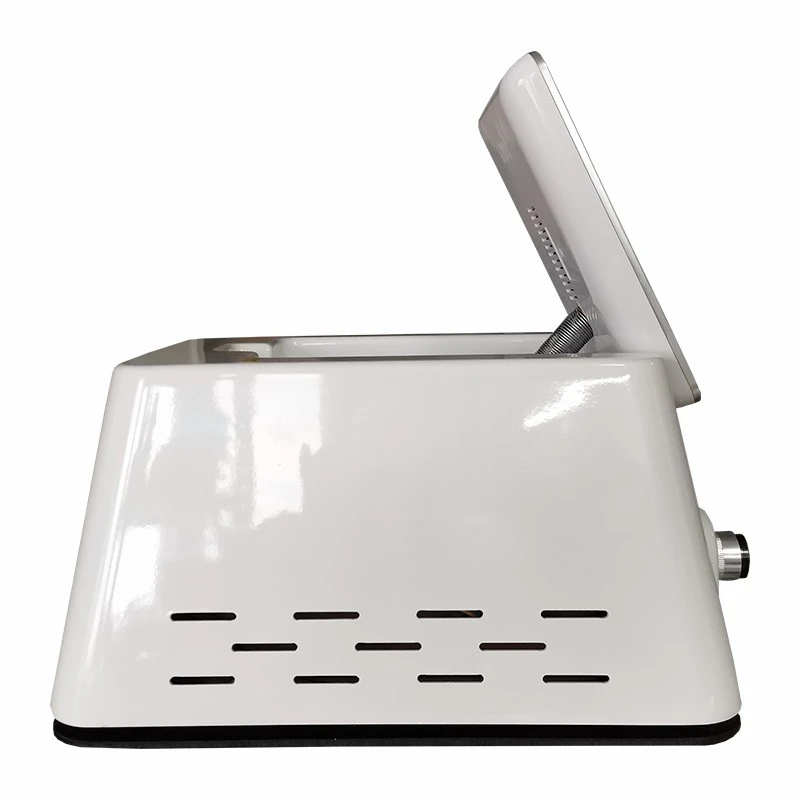
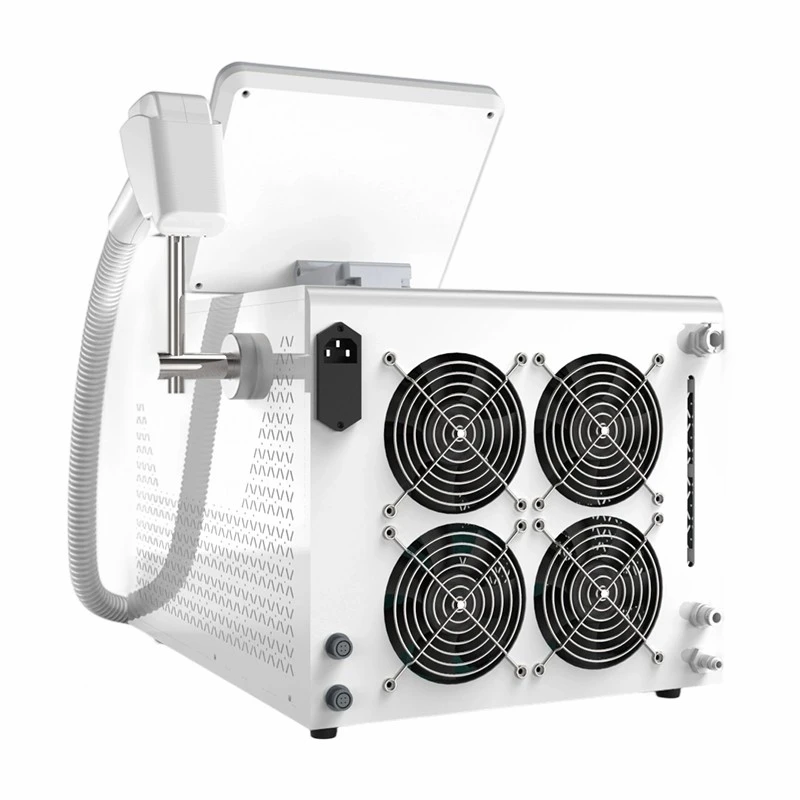
The cost and maintenance of a laser machine are also important considerations when choosing a laser for a specific medical application. Diode lasers are generally less expensive than CO2 lasers, as they are more compact and energy-efficient. They also require less maintenance, as they do not have a gas-filled tube that needs to be replaced periodically.
CO2 lasers, on the other hand, are more expensive than diode lasers, as they are larger and more complex. They also require more maintenance, as they have a gas-filled tube that needs to be replaced periodically and a cooling system that needs to be maintained. However, CO2 lasers are more versatile and can be used for a wider range of applications, which may justify the higher cost and maintenance requirements.
Conclusion
In conclusion, both diode laser machines and CO2 laser machines have their own advantages and limitations in medical applications. Diode lasers are more precise, safer, and less expensive than CO2 lasers, making them a popular choice for a variety of medical applications, such as hair removal, pigmented lesions, and vascular lesions. CO2 lasers, on the other hand, are more versatile and can be used for a wider range of applications, such as cutting, ablating, and coagulating tissue, but they are also more expensive and require more maintenance.
As a supplier of diode laser machines, I believe that diode lasers offer a number of advantages over CO2 lasers in medical applications, especially for applications that require precision, safety, and cost-effectiveness. However, the choice of laser ultimately depends on the specific needs and requirements of the patient and the medical professional. If you are interested in learning more about our diode laser machines or would like to discuss your specific needs and requirements, please do not hesitate to contact us for a consultation. We look forward to working with you to find the best laser solution for your medical practice.
References
- Bäumler, W., & Schröder, W. (2012). Lasers in dermatology. Springer.
- Tanzi, E. L., & Alster, T. S. (2004). Lasers in dermatology: 2004 update. Journal of the American Academy of Dermatology, 51(3), 365-381.
- Goldman, M. P., & Fitzpatrick, R. E. (222222222222222222222222222222222222222222222222222222222222222222222222222222222222222222222222222222222222222222222222222222222222222222222222222222222222222222222222222222222222222222222222222222222222222222222222222222222222222222222222222222222222222222222222222222222222222222222222222222222222222222222222222222222222222222222222222222222222222222222222222222222222222222222222222222222222222222222222222222222222222222222222222222222222222222222222222222222222222222222222222222222222222222222222222222222222222222222222222222222222222222222222222222222222222222222222222222222222222222222222222222222222222222222222222222222222222222222222222222222222222222222222222222222222222222222222222222222222222222222222222222222222222222222222222222222222222222222222222222222222222222222222222222222222222222222222222222222222222222222222222222222222222222222222222222222222222222222222222222222222222222222222222222222222222222222222222222222222222222222222222222222222222222222222222222222222222222222222222222222222222222222222222222222222222222222222222222222222222222222222222222222222222222222222222222222222222222222222222222222222222222222222222222222222222222222222222222222222222222222222222222222222222222222222222222222222222222222222222222222222222222222222222222222222222222222222222222222222222222222222222222222222222222222222222222222222222222222222222222222222222222222222222222222222222222222222222222222222222222222222222222222222222222222222222222222222222222222222222222222222222222222222222222222222222222222222222222222222222222222222222222222222222222222222222222222222222222222222222222222222222222222222222222222222222222222222222222222222222222222222222222222222222222222222222222222222222222222222222222222222222222222222222222222222222222222222222222222222222222222222222222222222222222222222222222222222222222222222222222222222222222222222222222222222222222222222222222222222222222222222222222222222222222222222222222222222222222222222222222222222222222222222222222222222222222222222222222222222222222222222222222222222222222222222222222222222222222222222222222222222222222222222222222222222222222222222222222222222222222222222222222222222222222222222222222222222222222222222222222222222222222222222222222222222222222222222222222222222222222222222222222222222222222222222222222222222222222222222222222222222222222222222222222222222222222222222222222222


