

Do hair growth machines work for all hair types?
Leave a message

Do hair growth machines work for all hair types? This is a question that many people struggling with hair loss often ask. As a supplier of hair growth machines, I've delved deep into this topic to provide you with a comprehensive answer.
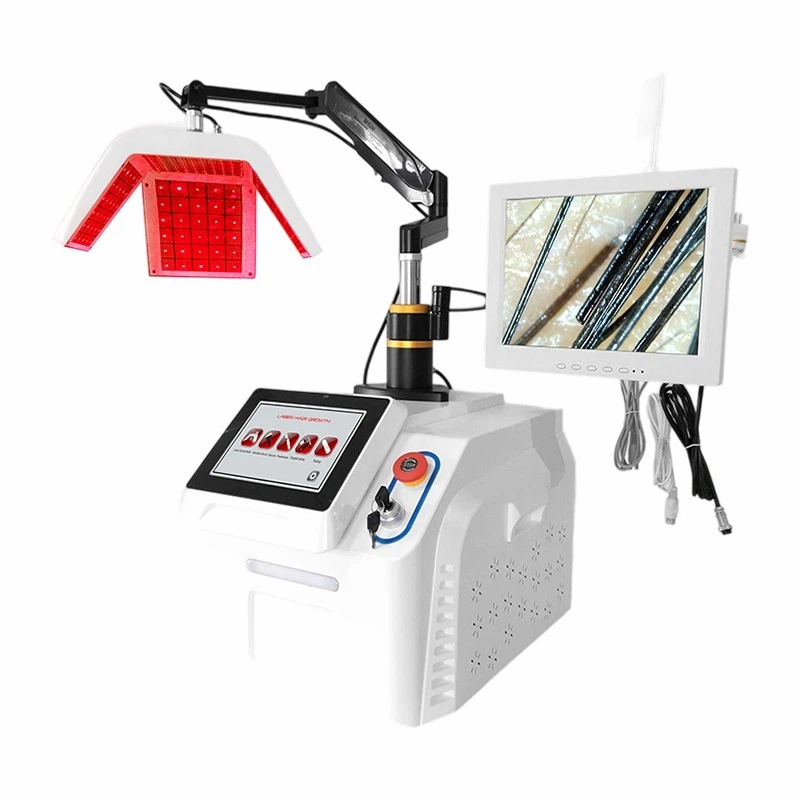
First, let's understand the basic principle behind hair growth machines. Most hair growth machines, such as the Diode Laser Hair Regrowth Machine and Diode Laser Hair Growth Machine, use low - level laser therapy (LLLT). LLLT works by stimulating the hair follicles at a cellular level. When the laser light penetrates the scalp, it is absorbed by the mitochondria in the hair follicle cells. This absorption triggers a series of biochemical reactions that increase blood circulation to the follicles, promote the production of adenosine triphosphate (ATP), and stimulate the growth phase of the hair cycle.
Now, let's consider different hair types. There are generally three main hair types: straight, wavy, and curly. Each hair type has its own unique characteristics, and these can potentially affect the effectiveness of hair growth machines.
Straight hair is relatively easy to manage when it comes to using hair growth machines. The straight structure allows the laser light to penetrate the scalp more directly. Since there are no curls or waves to obstruct the light, the hair follicles are more likely to receive an adequate amount of laser energy. For individuals with straight hair, the Hair Loss Treatment Machine can often work quite effectively. The consistent delivery of laser light can stimulate the follicles, leading to improved hair growth over time.
Wavy hair, on the other hand, has a more complex structure. The waves can cause the hair to bunch up in some areas, which might create shadows on the scalp. These shadows can reduce the amount of laser light that reaches the hair follicles. However, this doesn't mean that hair growth machines are ineffective for wavy hair. With proper positioning of the machine and regular use, the benefits of LLLT can still be achieved. It may take a bit more effort to ensure that all areas of the scalp receive sufficient light, but with patience and consistency, wavy - haired individuals can also experience positive results.
Curly hair presents the most challenges. The tight curls can severely block the laser light from reaching the scalp. The hair follicles in curly hair are often located deeper in the scalp, and the curls can act as a barrier, preventing the light from penetrating effectively. Some studies suggest that individuals with curly hair may need to use hair growth machines for a longer period or at a higher intensity to achieve the same results as those with straight or wavy hair. However, it's important to note that using a machine at too high an intensity can cause damage to the scalp and hair. Therefore, it's crucial to follow the manufacturer's instructions carefully.
In addition to the physical structure of the hair, other factors can also influence the effectiveness of hair growth machines across different hair types. For example, the color of the hair can play a role. Darker - colored hair tends to absorb more light, which can be both an advantage and a disadvantage. On one hand, it means that the hair can potentially absorb more of the laser energy. On the other hand, if the hair absorbs too much light, it can heat up and cause discomfort or damage to the hair shaft. Lighter - colored hair, such as blonde or gray hair, may not absorb the laser light as well, which could potentially reduce the effectiveness of the treatment.

Another factor is the overall health of the scalp. A healthy scalp provides a better environment for hair growth. If the scalp is dry, itchy, or has a skin condition, it can affect the ability of the hair follicles to respond to the laser treatment. Therefore, individuals with any scalp issues should address these problems before starting to use a hair growth machine.
It's also important to mention that genetic factors play a significant role in hair loss and hair growth. Male and female pattern baldness, which are genetically determined, can be more difficult to treat. While hair growth machines can help to some extent, they may not completely reverse the effects of genetic hair loss. However, they can slow down the progression of hair loss and promote the growth of existing hair.
So, do hair growth machines work for all hair types? The answer is that they can work for most hair types, but the effectiveness may vary. Straight - haired individuals are likely to see the most straightforward results, while those with wavy and curly hair may need to be more diligent in their use of the machines. It's also essential to manage expectations and understand that hair growth is a slow process. Results may not be visible immediately, and it can take several months of consistent use to notice a significant improvement.
As a supplier of hair growth machines, we are committed to providing high - quality products that are suitable for a wide range of hair types. Our Diode Laser Hair Regrowth Machine, Diode Laser Hair Growth Machine, and Hair Loss Treatment Machine are designed with advanced technology to ensure maximum effectiveness. We also offer detailed instructions and support to help our customers achieve the best results.
If you're interested in purchasing a hair growth machine or have any questions about how our products can work for your specific hair type, we encourage you to reach out to us for a procurement discussion. We are here to assist you in your journey towards healthier, fuller hair.
References
- "Low - Level Laser (Light) Therapy (LLLT) in Skin: Stimulatory Effects" by Hamblin MR, Demidova - Rice TN.
- "The use of low - level laser therapy in the treatment of androgenic alopecia: A review" by Blumetti JA, et al.


